
Best Dark Academia Wall Decor: 2026 Buying Guide
Table of Contents
Best Dark Academia Wall Decor: What Actually Works in 2026
1. Dark Academia Wall Art: Canvas Prints, Art Prints, and Vintage-Inspired Pieces
2. Building a Dark Academia Gallery Wall That Feels Collected, Not Cluttered
3. Dark Academia Room Decor: Layering Books, Brass, and Layered Textures
4. Materials, Print Quality, and Framing: What Separates Worthwhile Wall Decor
5. Budget Tiers and Rental-Friendly Wall Decor Options
6. Care, Lighting, and Color Coordination for Dark Academia Walls
Frequently Asked Questions
Last Updated: October 16, 2026
Best Dark Academia Wall Decor: What Actually Works in 2026
Dark academia wall decor is the practice of layering vintage-inspired art, literary motifs, and moody color palettes to turn a room into a scholarly, atmospheric space. At Heather Dorsch Creations, we design original watercolor artwork for exactly this aesthetic. This guide ranks the best dark academia wall decor by type, then covers sizing, materials, budget tiers, and rental-friendly options. Below, we'll show you how to build a wall that feels collected over decades rather than bought in one afternoon.
Most guides hand you a mood board and stop there. That's the problem. A wall of gothic art prints in mismatched frames looks like a dorm room, not a study. The fix is boring but effective: decide your palette, pick your anchor piece, and build outward in odd numbers. We'll walk through all of it.
The five categories we cover, canvas prints, art prints, vintage art, gallery walls, and layered room decor, each solve a different problem. Pick the one that matches your space, not the one that photographs best on social media.
1. Dark Academia Wall Art: Canvas Prints, Art Prints, and Vintage-Inspired Pieces
Dark academia wall art breaks into three practical formats: canvas prints for texture and size, art prints for flexibility and price, and vintage-inspired pieces for instant character. Each has a distinct role, and most successful walls use all three.
Canvas prints carry a room. They suit a large blank wall above a desk or bed where a framed piece would feel small. The trade-off is that canvas softens fine linework, so delicate botanical illustrations lose some detail.
Art prints do the opposite. They hold crisp detail, work in any standard frame, and let you swap pieces seasonally without rehanging hardware. For literary motifs, scholarly diagrams, and portraiture, a print is usually the better call.
Vintage-inspired pieces add the age that new decor can't fake. Think aged paper tones, classical imagery, and antique decor reproductions. Mixing one or two vintage-style pieces among newer prints is what makes a wall read as collected.

Pro Tip Hang your heaviest or largest piece first, then build around it with smaller prints. Starting with the small pieces almost always forces you to rehang everything once the anchor arrives.
2. Building a Dark Academia Gallery Wall That Feels Collected, Not Cluttered
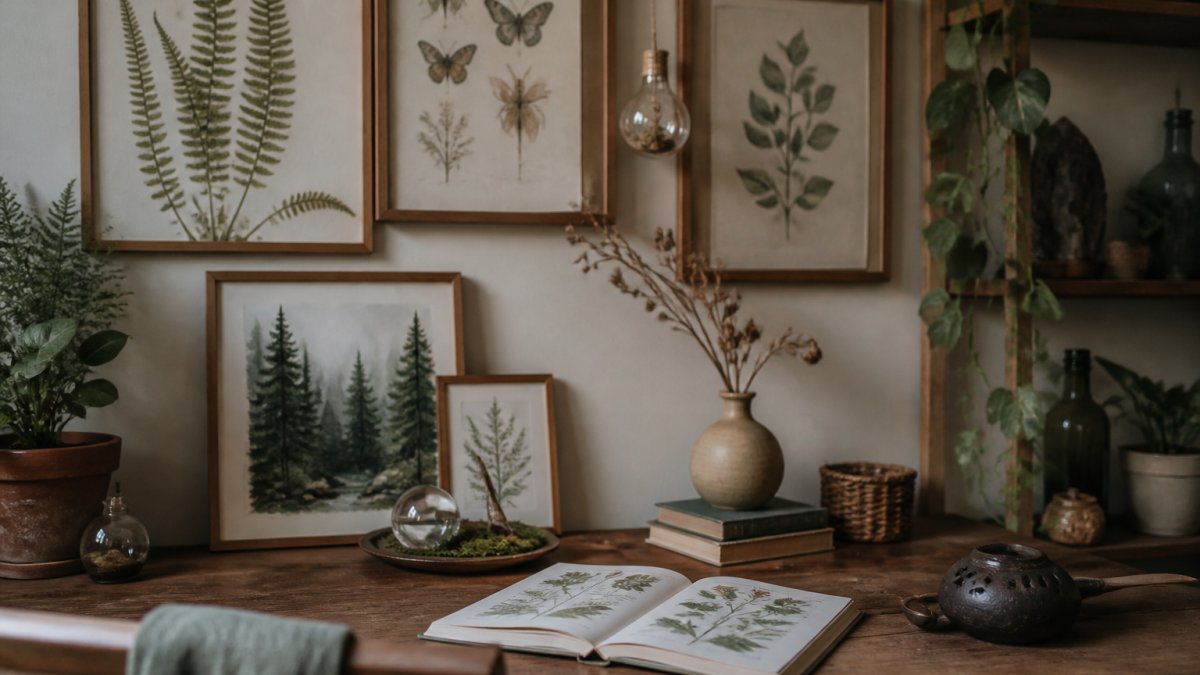
A dark academia gallery wall works when it follows three rules: one palette, odd numbers, and deliberate spacing. Clutter comes from mixing too many frame styles, colors, and subject types on one wall.
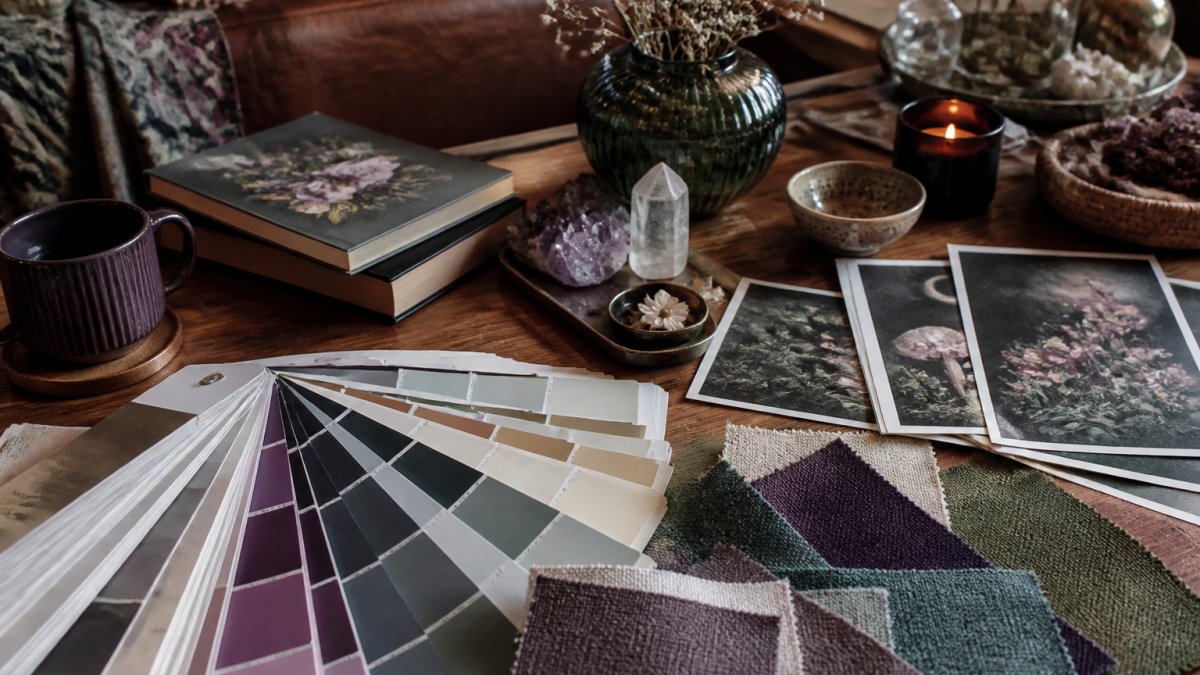
Start with a palette of three to four colors. Deep green, oxblood, charcoal, sepia, and aged brass cover most dark academia rooms. Every piece you add should contain at least one of those colors.
Then plan the layout on the floor or with paper templates before you touch a nail. Here's the sequence we recommend:
Lay all pieces on the floor and arrange until the spacing feels even
Pick an anchor piece and center the group on it
Keep 2 to 3 inches between frames for a tight, collected look
Use 4 to 6 inches between frames if you want a looser, gallery-style spread
Photograph the arrangement before you hang anything
Odd numbers of pieces look more natural than even ones. Seven small prints will always read better than eight.
Watch Out Hanging pieces at eye level for you is the most common mistake. Art should sit so its center is roughly 57 to 60 inches from the floor. Hang higher and the whole wall feels disconnected from the furniture below it.
3. Dark Academia Room Decor: Layering Books, Brass, and Layered Textures
Dark academia room decor extends past the frame. The wall is the backdrop, but books, brass accents, and sumptuous textiles are what make a room feel like a study instead of a poster display.
Books do the heaviest lifting. Stack them horizontally on a shelf, spine-out on a lower ledge, or lean three or four against the wall beneath a print. Century-old literature looks best, but any clothbound or leather-bound volume works.
Brass accents add warmth against a dark color palette. Picture lights, small candlesticks, a brass frame or two, and an aged desk lamp all pull the eye across the wall. Keep brass to two or three spots per wall so it reads as intentional.
Layered textures finish the room. A wool throw, a linen curtain, and a worn leather chair soften the hard edges that dark walls can create.
For study spaces and reading nooks, we suggest pairing one large focal print with a small cluster of books and a single brass light. Bedroom decor follows the same logic but with softer textiles. Living rooms can handle a wider gallery wall because there's more distance to view it from.
4. Materials, Print Quality, and Framing: What Separates Worthwhile Wall Decor
Print quality comes down to three things: paper weight, ink type, and color accuracy. Get those right and a print will look sharp for years. Get them wrong and it fades or curls within a season.
Look for prints on paper of at least 200 gsm. Heavier stock resists waving and holds color better. Pigment inks outlast dye inks, especially in rooms with direct light. And a print should match the color you saw on screen, which is why ordering from the artist directly usually beats buying a mass-produced reproduction.
Framing matters just as much. Here's how the common options compare:
Frame Type | Best For | Trade-Off |
Thin metal | Modern, tight gallery walls | Feels cold against vintage art |
Wood | Warm, antique decor | Heavier, needs solid anchors |
Brass or gold | Dark academia, classical art | Can overwhelm small prints |
Floating frame | Canvas prints | Adds depth but costs more |
No frame | Canvas, tapestries | Cheapest, least finished look |
Matting is the detail most buyers skip. A 2 to 3 inch mat gives a print breathing room and makes a small piece look deliberate rather than accidental.
Key Takeaway The single upgrade that improves any dark academia wall most is better matting and consistent frames. Matching frames across mismatched art does more than buying one expensive piece.
5. Budget Tiers and Rental-Friendly Wall Decor Options
Wall decor pricing depends on size, materials, and whether the piece is an original or a reproduction, so we recommend checking each maker's site for current prices. What you can control is how you allocate across tiers.
Think in three tiers: a foundation piece, mid-range fillers, and small accents. Put most of your budget into one or two large anchor pieces. Fill the rest with affordable prints and small decorative objects. A wall with one strong focal point and several inexpensive supporting pieces looks better than five mid-priced pieces competing for attention.
Rental-friendly options solve the damage problem:
Adhesive strips rated for the weight of your frame
Picture ledges that rest on a shelf rather than the wall
Leaning frames on a floor ledge or mantel
Tension rods or freestanding screens for temporary walls
Lightweight canvas instead of glass-front frames
Adhesive strips work well for prints under a few pounds. Anything heavier, or anything with glass, needs a proper anchor. If you rent, photograph the wall before you hang and patch any holes before you move out.
For anyone building a wall on a tight budget, buy the anchor piece first and let the rest accumulate over time. Rushed walls look rushed.
6. Care, Lighting, and Color Coordination for Dark Academia Walls
Lighting decides whether a dark academia wall looks moody or just dark. Two light sources beat one, and warm bulbs beat cool ones.
Picture lights mounted above a large piece add the museum feel this aesthetic depends on. A floor lamp angled toward the wall fills in the lower half. Keep bulbs warm, around 2700K, so the room stays sultry rather than clinical.
Care is simple but easy to neglect. Keep prints out of direct sunlight, dust frames with a dry cloth, and avoid spraying cleaner onto glass, since it seeps behind the frame. Canvas should be dusted gently and never wiped with a wet cloth.
Color coordination follows one rule: your wall should echo two colors already in the room. If your furniture is dark wood and your textiles are deep green, pull those greens and browns into the art. A wall that introduces a brand-new color family will always look bolted on.
Pro Tip Rotate two or three smaller prints every few months. It costs nothing, refreshes the room, and keeps you from overbuying new decor to scratch the same itch.
Building a dark academia wall that feels genuinely collected takes patience, and the hardest part is finding art that matches both your palette and your values. Heather Dorsch Creations creates original watercolor artwork with dark academia, cottagecore, and macabre themes, including illustrations of native species and endangered animals. Every piece is designed by Heather, an illustrator with a bachelor's degree in illustration whose work has been displayed at the Elgin Public Museum. If you want wall decor that supports environmental education and comes from an actual artist, browse the collection and find your anchor piece.
Frequently Asked Questions
What wall art works best with dark academia decor?
Dark academia wall decor leans on moody, narrative pieces: vintage portraits, botanical and natural history prints, architectural drawings, and literary motifs. Canvas prints and art prints of historical artwork fit because they add age and character without requiring an antique budget. Mix one larger anchor piece with smaller prints so the arrangement feels collected. Deep greens, browns, oxblood, and sepia tones keep the palette cohesive.
How do you create a dark academia gallery wall without it looking cluttered?
Start with a layout on the floor or paper before hanging anything. Choose one anchor piece, then build outward with pieces that share a color family or theme, like portraiture and classical art. Keep consistent spacing of 2 to 3 inches between frames. Mix frame sizes but repeat finishes, such as brass or dark wood, so the dark academia gallery wall reads as intentional rather than busy.
Is dark academia still in style in 2026?
Yes. The aesthetic keeps evolving rather than fading, and it now blends with cottagecore and witchcore elements in many homes. Searches for dark academia room decor remain steady because the look is built on timeless pieces: books, brass accents, wood, and moody color palettes. Those items outlast trend cycles, so a dark academia room stays relevant even as specific micro-trends change.
How can I hang dark academia wall decor in a rental without damaging the walls?
Use removable adhesive strips rated for the weight of your frame, or lean larger pieces on a shelf or mantel instead of hanging them. Command-style hooks work for lightweight canvas prints and art prints. For heavier pieces, choose a freestanding easel or a picture ledge, which needs only minimal anchoring and leaves small holes you can patch. Always check your lease before mounting anything.
Shop

Comments